

 مدیر
مدیر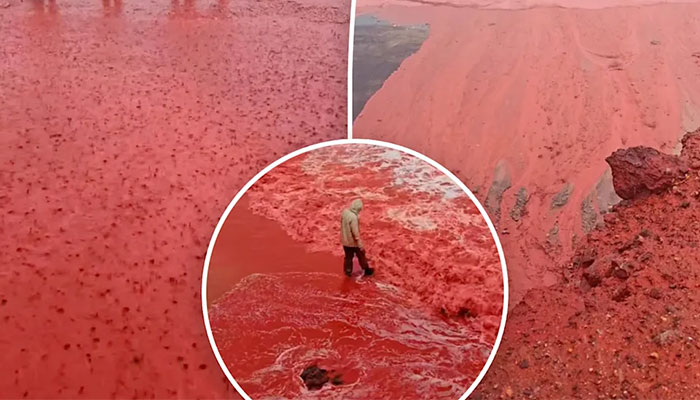
Red Water Phenomenon After Rainfall in Hormuz Island: Nature’s Crimson Masterpiece in the Persian Gulf
Following the recent rainfall in Hormozgan Province, one of Iran’s most extraordinary natural phenomena has once again emerged on Hormuz Island. The interaction between rainwater and the island’s mineral-rich red soil has resulted in the famous “Red Water” phenomenon, a rare and visually striking event that transforms runoff streams and coastal waters into shades of deep red.
This short-lived yet globally unique phenomenon highlights the exceptional geological identity of Hormuz Island and reinforces its position as a premier destination for marine tourism and geotourism in the Persian Gulf.
What Is the Red Water Phenomenon in Hormuz Island?
The Role of Red Mineral Soil
Hormuz Island is renowned for its iron oxide–rich red soil, formed over millions of years through complex geological processes. When heavy rainfall occurs:
- Rainwater flows over the red soil layers
- Mineral particles dissolve and suspend in the runoff
- Streams of red-colored water move toward the shoreline
As a result, the sea temporarily appears crimson or rust-colored, creating a breathtaking natural spectacle.
Seasonal and Temporary Nature of Red Water in Hormuz
The Red Water phenomenon:
- Is not permanent
- Occurs only after significant rainfall
- Typically lasts from a few hours to several days
This rarity makes it a highly anticipated natural event, attracting photographers, researchers, and tourists from across the region.
Media Attention and Tourism Impact
Viral Exposure on Social Media
In recent days, images and videos of Red Water flowing into the Persian Gulf have gained widespread attention across:
- Social media platforms
- Tourism-focused websites
- Environmental and nature publications
This exposure has significantly increased global awareness of Hormuz Island’s natural wonders.
Rising Online Search Trends
Search queries such as:
- Red Water Hormuz Island
- Hormuz Island red soil
- Red beach after rain in Iran
- Natural phenomena in the Persian Gulf
have shown a noticeable increase, making this topic highly valuable for SEO-driven content strategies.
Environmental and Geological Significance
A Completely Natural and Non-Polluted Event
Contrary to common misconceptions, the Red Water phenomenon:
- Is not caused by industrial pollution
- Contains no chemical contamination
- Is entirely natural and mineral-based
It reflects the unique geological composition of Hormuz Island rather than environmental damage.
Scientific and Educational Value
The phenomenon holds significant importance for:
- Geologists studying sedimentary processes
- Environmental researchers
- Educational tourism and eco-awareness initiatives
A Strategic Opportunity for Marine and Luxury Tourism
A Unique Natural Brand for Hormuz Island
Very few places in the world experience a phenomenon comparable to Hormuz’s Red Water. This makes the island:
- A rare geological destination
- A strong natural brand within marine tourism
- An ideal subject for luxury and experiential travel marketing
Recommended SEO Keywords
- Red Water Hormuz Island
- Red Soil Beach Iran
- Hormuz Island natural phenomenon
- Persian Gulf marine tourism
- Geotourism in southern Iran
Environmental Responsibility and Visitor Guidelines
To preserve this fragile natural wonder, visitors are advised to:
- Avoid walking through runoff channels
- Refrain from collecting red soil
- Respect local ecosystems and coastal areas
- Follow sustainable tourism principles
Protecting Hormuz Island ensures that future generations can witness this phenomenon.
Conclusion
The reemergence of Red Water after rainfall in Hormuz Island is a powerful reminder of nature’s artistry in southern Iran. This rare and visually stunning event not only enhances the island’s environmental and geological value but also creates a compelling opportunity for:
- Marine tourism development
- High-end, SEO-optimized digital content
- International visibility of the Persian Gulf’s natural heritage
Hormuz Island proves once again that even a single rainfall can reveal a story written in color, minerals, and time.