

 مدیر
مدیر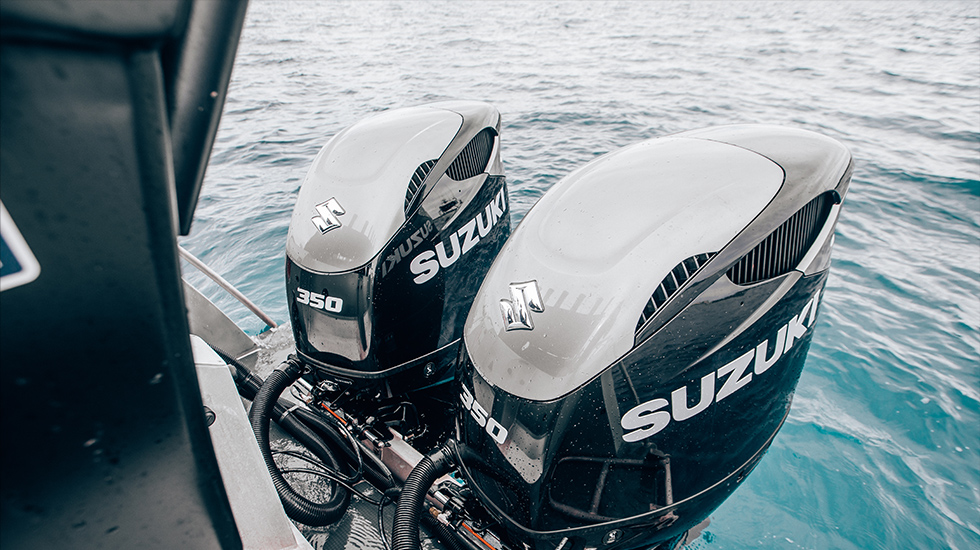
⚙️ Section 1: General Specifications
- How many cylinders does the DF350 have?
6-cylinder V-shaped (V6). - What is the engine displacement?
4,028 cc (4.0 liters). - Engine type?
4-stroke, DOHC, 24-valve. - Maximum power output?
350 HP at 5,500 RPM. - Fuel system?
EFI – Electronic Fuel Injection. - Starting system?
Electric Start. - Cooling system?
Water-cooled. - Gear reduction ratio?
2.50:1 - Propeller rotation direction?
Standard RH (Right-hand) and LH (Left-hand) versions available. - Engine weight?
Approximately 275 kg.
🔋 Section 2: Electrical & Control
- Operating voltage?
12 Volts. - Alternator output?
54 Amps. - Does the engine have an ECU?
Yes, advanced Suzuki Marine ECU. - Warning system?
Yes, light, buzzer, and limp mode. - What happens if oil pressure drops?
ECU reduces RPM and alerts the operator. - Can it connect to a Suzuki Multi-Function Gauge?
Yes. - NMEA2000 support?
Yes. - Does it have Lean Burn system?
Yes, for improved fuel efficiency. - Does it have a Knock Sensor?
Yes, to prevent detonation. - Does it support Drive-by-Wire?
Yes, with Precision Control digital throttle.
🛠️ Section 3: Service & Maintenance
- Engine oil change interval?
Every 100 hours or once a year. - Recommended oil type?
Suzuki 10W-40 Marine 4-Stroke. - Oil filter replacement?
Yes, every service. - Spark plug replacement interval?
Every 200 hours or annually. - Recommended spark plug?
NGK IFR6J11 or equivalent. - Lower unit oil change interval?
Every 100 hours or annually. - Fuel filter replacement?
Every 100 hours or when performance decreases. - Does it have a water-separating fuel filter?
Yes, dual fuel/water filter. - When to inspect the propeller?
Before every trip for damage or warping. - Recommended lower unit oil?
Suzuki Hypoid Gear Oil 90.
💧 Section 4: Cooling & Flushing
- Where is the water pump located?
In the lower unit under the propeller shaft. - Impeller replacement interval?
Every 200 hours or every 2 years. - What if water flow is weak?
Check cooling passages or water pump. - Can it be flushed on land?
Yes, via designated flushing port. - Should the engine run during flushing?
Yes, at idle. - Normal operating temperature?
65–85°C. - What if the engine overheats?
ECU warns and protects the engine. - Is the engine corrosion-resistant?
Yes, aluminum alloy with sacrificial anodes. - Should it be rinsed after saltwater use?
Yes. - Cold weather precautions?
Use antifreeze and drain water system.
⛽ Section 5: Fuel & Consumption
- Recommended fuel type?
Unleaded gasoline, 91 octane or higher. - Fuel consumption at 5,500 RPM?
Approximately 45–50 L/h. - Does it have an internal fuel pump?
Yes. - Is a primer bulb needed?
Yes, for initial start. - Engine shuts off at high RPM?
Check fuel filter or tank venting. - Is old fuel harmful?
Yes, may clog injectors. - Fuel additives recommended?
Yes, for injector cleaning and corrosion prevention. - Is it dual-fuel?
No, gasoline only. - Performance at high altitude?
ECU adjusts air/fuel ratio automatically. - What if water enters the fuel?
Engine runs rough and may stall.
⚓ Section 6: Installation & Operation
- What does long shaft model mean?
AX = Long Shaft, 25″ standard version. - Shaft length?
25 inches. - Recommended boat size?
7–10 meters, heavy recreational boats. - Has Power Trim & Tilt?
Yes, fully electric. - Can two DF350 engines be installed together?
Yes, Twin Engine setup with correct rotation. - Engine control type?
Digital Precision Control (Drive-by-Wire). - Supports digital steering?
Yes, compatible with electronic helm systems. - Maximum Trim angle?
Approximately 65°. - How to set engine height?
Anti-cavitation plate level with boat bottom. - If the engine vibrates?
Check mounts, alignment, and propeller.
🔧 Section 7: Errors & Warnings
- Red warning light on?
Check oil or engine temperature. - Engine stalls at idle?
Likely spark plugs or fuel issue. - Engine won’t reach high RPM?
Check fuel filter or propeller. - Knocking noise from propeller?
Check shaft or propeller attachment. - No water from exhaust?
Water pump failure. - Lower unit oil milky?
Water contamination. - Fuel smell detected?
Check fuel system for leaks. - Hard starting when cold?
Check starter or injectors. - Idle unstable?
Clogged injector or spark plug issue. - Oil consumption high?
Leak or internal combustion issue.
🌊 Section 8: User Tips & Efficiency
- Optimal cruising RPM?
4,200–4,600 RPM. - Resistant to saltwater?
Yes, with protective anodes. - Anode locations?
Lower unit and mounts. - Anode replacement interval?
Every 6–12 months. - Shallow water operation?
Trim up, low speed. - Waterproof in rain?
Yes. - Rinse after use?
Freshwater rinse required. - Break-in period?
10 hours initial running. - RPM limit during break-in?
Maximum 4,000 RPM first 4 hours. - Can it be transported lying down?
No, vertical only.
🧠 Section 9: Safety & General Info
- Country of manufacture?
Japan – Suzuki Marine. - Genuine parts available in Iran?
Yes, via Atlas Peymaye. - Where is the serial number located?
Right side of engine mount. - Is there a Persian manual?
Yes, provided by the official distributor. - Warranty period?
2 years or 200 hours. - Using non-genuine oil voids warranty?
Yes. - Winterization procedure?
Drain fuel, lubricate cylinders, flush cooling system. - Can it remain unused for long periods?
Yes, with proper preparation. - Suitable for fresh and saltwater?
Yes. - Compatible with hydraulic steering?
Yes, with kit.
🧩 Section 10: Advanced Features
- What is VVT in DF350?
Variable Valve Timing for better torque at low RPM. - Dual Air Intake system?
Yes, for improved airflow and efficiency. - Lean Burn system?
Reduces fuel consumption by 10–15%. - Drive-by-Wire?
Yes, digital throttle and shift control. - Does ECU store error codes?
Yes, readable via SDS. - Difference between DF350AX and DF350A?
AX is long shaft (25″) with digital trim. - Is there a counter-rotation model?
Yes, RH and LH versions available. - Body color?
Super Cool Black (Pearl Nebular Black). - ECO display?
Yes, Suzuki ECO Drive Indicator. - Official distributor in Iran?
✅ Atlas Peymaye – Atlas Marine & Products Info
Exclusive distributor of Suzuki Marine, providing genuine parts and support.
0